Germany’s federal waterways are of central importance to the national economy. A recent expert report by DIW Econ, commissioned by the Verein für europäische Binnenschifffahrt und Wasserstraßen e.V. (VBW), demonstrates that functioning waterway infrastructure is essential for value creation, employment and security of supply across numerous industrial regions.
Competition in Switzerland works

Although there are only a few providers in many Swiss industries, competitive pressure is high. A study by DIW Econ on behalf of the State Secretariat for Economic Affairs (SECO) shows that market concentration in Switzerland is in line with the European average, with Swiss companies achieving significantly lower mark-ups. A key driver of this is the strong focus on foreign trade: even in sectors where there are only a few domestic players, international competition creates price pressure and incentives for innovation.
Regional economic effects of the energy transition in the Hanover region
The energy transition is a powerful economic driver for the Hanover region. A study by DIW Econ shows that an ambitious energy transition by 2035 would result in additional investments of around €24.9 billion, €14.3 billion of which would directly benefit the Hanover region. This could generate around €9.5 billion in gross value added and create an average of around 4,100 jobs. Local budgets would also benefit significantly, with projected additional tax revenues of around €470 million.
These results demonstrate that climate protection and economic success go hand in hand. By consistently implementing the energy transition and making ambitious investments, the Hanover region can further expand its pioneering role on the path to achieving climate neutrality by 2035.
TU Dresden – Driver for Business, Innovation and Growth
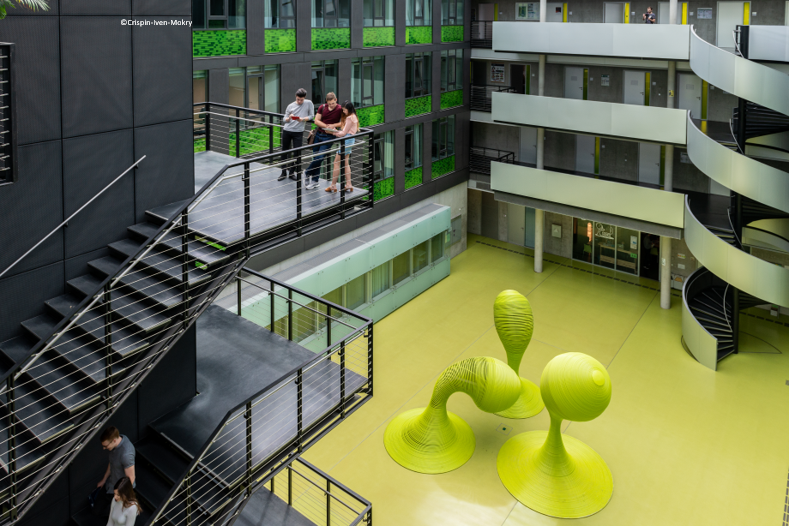
With around 30,000 students from 125 countries, 17 faculties and 119 degree programs, TU Dresden is one of the leading technical universities in Germany. As a University of Excellence and part of the DRESDEN-concept alliance, it drives innovation and strengthens Saxony as a business location through research cooperations and spin-offs.
But what concrete contribution does the TU Dresden make to regional value creation and employment? Which economic and structural effects can be identified? In our current study, we investigate these and other questions – from direct demand stimulation to long-term growth effects. It becomes clear that TU Dresden is much more than just a university – it is an engine for the economic and social development of the region.
Power2Jobs – Employment Impact of Hydrogen Technologies
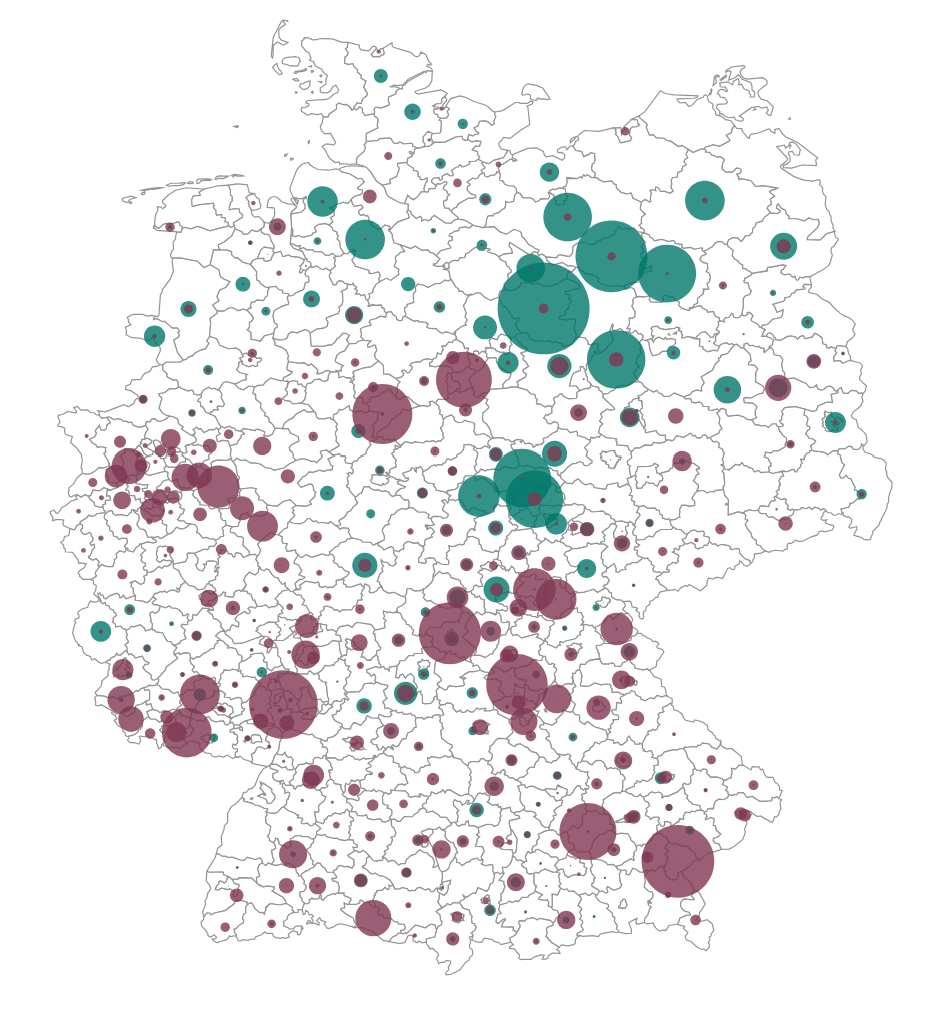
The hydrogen economy will play a decisive role in Germany’s green transformation in the coming decades. With its help, the goal of climate neutrality can be achieved while preserving German industry.
As part of the Hydrogen Atlas of Germany, the Power2Jobs subproject has investigated the potential significance of the hydrogen economy for regional labor markets.